13. Landsturm IR
As is known, the second line of national defense was called Landsturm in the Austrian provinces and Népfölkelés (Insurgents) in the Hungarian part of the Monarchy. The mostly older reservists sent here mainly performed construction, supply and control duties behind the fronts. These troops were organized into battalions set up on a territorial basis, following the division of the Landwehr and Honvéd military organization. In addition, in the first year of the war, each Landwehr and Honvéd district also set up a Landsturm (or Népfölkelő) infantry regiment. These were not intended for frontline activity either, nevertheless most of them were deployed in the Galician battles already in August 1914. There, they largely crumbled by the end of the year, and most of them were disbanded. Relatively few Hungarian Népfölkelő regiments remained, slightly more Austrian Landsturm. These were later filled with soldiers of younger ages, so they became fully combat-ready.
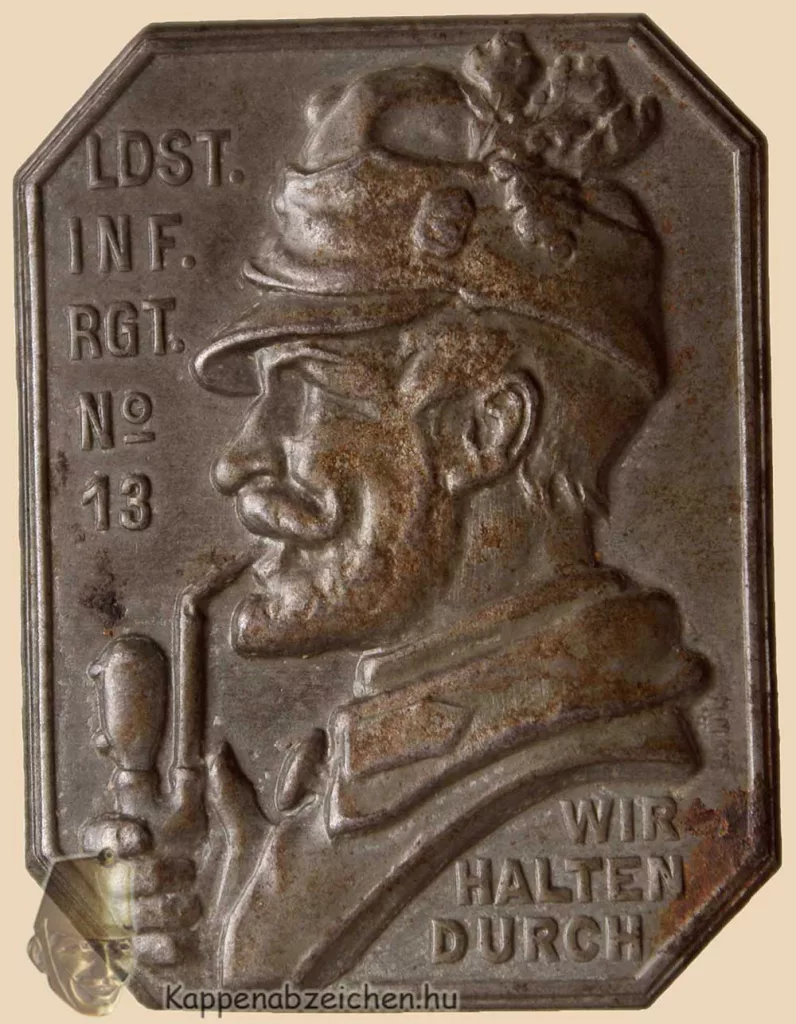
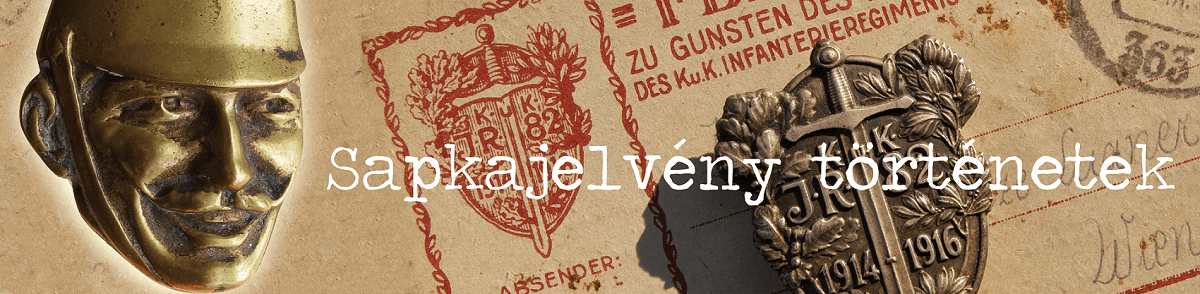
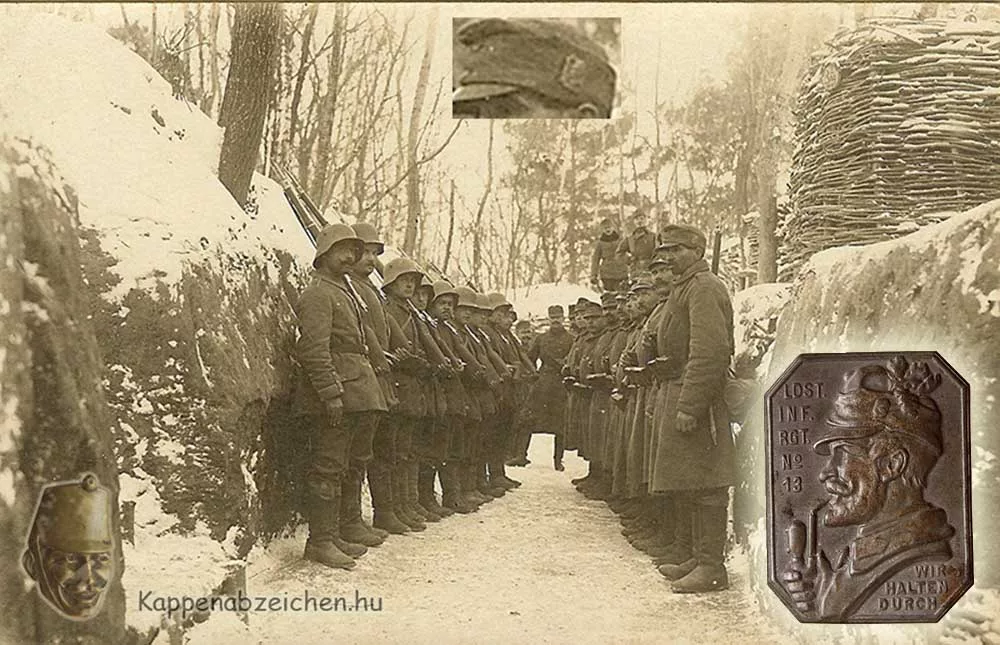
The badge of the 13th Landsturm Regiment still depicts the classic elderly, well-to-do daddy with a pipe in his hand. Don’t let the idyllic image fool you, the 13th Landsturm Regiment from the Sudetenland took part in many battles. The regiment was originally part of the Krakow garrison and the staff of the city fortress. In 1915, it was transferred to the 121st Brigade, then to the 92nd Brigade in 1916. They fought in the Hofmann Corps on the Eastern Front, then came under German command. From 1917 until the end of the war, they were a regiment of the 46th Rifle Division. They also ended the war on the Italian front. The wearing photo was apparently taken on the Eastern Front. On the left side of the picture we see Germans in helmets, on the right side are the 13ers.