Enver Pasha (2)
I have already written about Enver in a previous post (here). I will not repeat this. He was an extremely important figure for the Turkish ally. Accordingly, his name came up when emphasizing the Turkish war effort. Yet, unlike several German generals, no badge was made depicting him alone. This may have been because he did not personally appear in theaters of war important to the Monarchy, unlike German generals who also led Austro-Hungarian troops on some fronts.
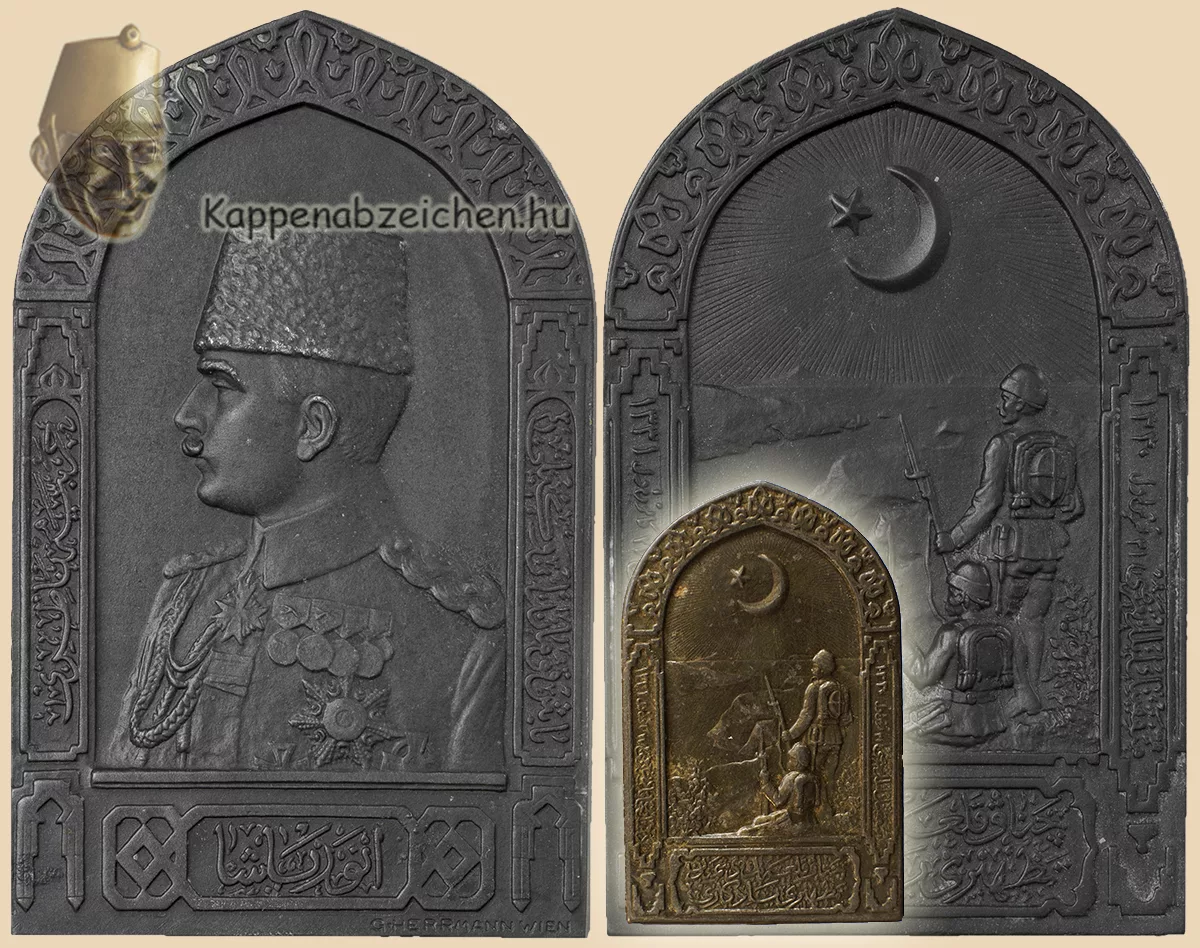
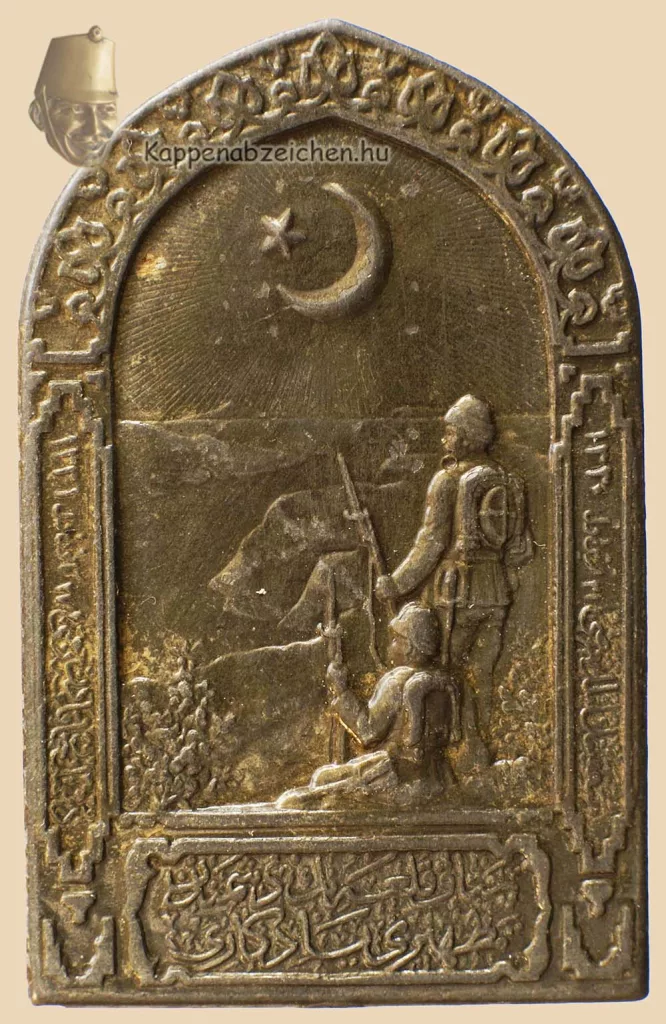
The Viennese coiner Gustav Herrmann was primarily known for his World War-themed plaques. On one side of the plaques, a front section or weapon was depicted, and on the other, a portrait of the person associated with it. Interestingly, badge makers mostly made badges from sides depicting weapons (e.g. 30.5 mortar) or fronts (Isonzo Armee, Dardanelles, Turkish motorized squad, etc.). The beautiful scene shown on the plaque presented here, the guards of the Dardanelles, also appears on a cap badge.
On the other side of the plaque, a nice portrait of Enver Pasha can be seen. No other plaque or badge from the period shows a similarly elaborate depiction of him. Interestingly, the badge manufacturer Winter and Adler did not take portraits from the artist’s plaques from the other Herrmann plaques either. Though such a well-known personality, who appears on many badges, as general Boroevic, can also be found on one of the plaques. Thus, Enver Pasha’s portrait did not appear on a cap badge produced in large numbers. I know of only one exception, the portrait of Tsar Ferdinand I of Bulgaria that also comes from a Herrmann plaque (shown here).